

Views: 0 Author: Site Editor Publish Time: 2026-11-09 Origin: Site


Blood bags play an unsung yet absolutely critical role in modern healthcare. They silently facilitate millions of life-saving transfusions and complex surgical procedures worldwide every year. Far from being simple plastic pouches, these containers are highly engineered medical devices designed to protect and preserve delicate biological fluids. At the very foundation of this technology is a specialized polymer known as medical grade PVC.
Navigating the manufacturing landscape for these devices presents a formidable regulatory challenge. Manufacturers and healthcare providers carry the heavy burden of ensuring that the materials utilized are biologically inert and structurally safe. The polymer must preserve cellular components without introducing microscopic contamination. A single failure in material integrity can compromise an entire blood bank inventory. Consequently, this leads to severe clinical consequences for vulnerable patients.
Looking at the current manufacturing landscape, the medical plastics sector is undergoing a massive transformation. Recent industry analyses highlight a decisive shift toward non-phthalate formulations, driven by tightening global health policies and the European Medical Device Regulation. Furthermore, major healthcare networks are increasingly demanding materials that harmonize strict biocompatibility with supply chain transparency. This means polymer compounders must innovate rapidly. They are tasked with balancing legacy cellular preservation performance with next-generation toxicological safety profiles.
This comprehensive guide breaks down the exact technical requirements for utilizing this specialized polymer in manufacturing. From balancing chemical additives to surviving extreme thermal processing, we will explore the rigorous standards that govern these life-saving containers. By understanding these complex specifications, industry professionals can make highly informed decisions regarding material sourcing, compliance, and product development.
Material Supremacy: High-purity polyvinyl chloride remains the undisputed global standard for biological fluid storage. It offers a scientifically proven blend of optical clarity, flexibility, and high-frequency welding scalability.
The Additive Balancing Act: Chemical softening agents are essential for low-temperature flexibility. Manufacturers face the ongoing challenge of balancing the unique cell-preserving benefits of traditional compounds against an industry-wide shift toward safer, non-phthalate alternatives.
Strict Migration Limits: Rigorous analytical control over chemical leaching is legally mandated. This prevents potentially toxic compounds from migrating into the human bloodstream during critical trauma transfusions.
Thermal Resilience: Premium formulations must withstand brutal thermal or radiological clearing methods. Surviving 121 degrees Celsius steam autoclaving without sacrificing structural integrity is a non-negotiable baseline.
Regulatory Adherence: Market entry is impossible without strict compliance with international frameworks. Predominantly, this includes ISO 3826, United States Pharmacopeia Class VI biological reactivity tests, and the European Pharmacopoeia.
In its standard commercial form, polyvinyl chloride is a rigid and brittle plastic ubiquitous in construction pipes and industrial applications. However, when engineered for healthcare environments, it undergoes a radical transformation into a highly specialized, ultra-pure material. The "medical grade" designation means the polymer is synthesized within strictly controlled cleanrooms. It is entirely devoid of heavy metal stabilizers like lead or cadmium and completely free from unregulated industrial impurities.
The evolution of biological fluid storage starkly highlights the indispensable nature of this material. Picture the chaotic hospital wards of the 1940s, where human blood was collected in fragile glass bottles. These cumbersome vessels were prone to shattering during transport and required tedious cleaning protocols. Moreover, they necessitated an open-air venting system that frequently invited bacterial contamination. The mid-century transition to the closed, collapsible blood bag fundamentally revolutionized transfusion medicine. This shift eliminated air embolisms and enabled the sterile separation of plasma, platelets, and red cells.
Today, this specialized polymer dominates the medical sector because it delivers three non-negotiable material properties. First, its high optical transparency allows medical technicians to visually inspect the stored contents for hemolysis, lipidemia, or bacterial clots long before a needle reaches the patient. Second, it boasts exceptional flexibility and kink resistance. The pliable nature of the film ensures the container empties completely by gravity. Meanwhile, the attached tubing resists pinching to maintain a continuous flow during critical trauma care. Finally, when properly compounded, the polymer matrix achieves superior biocompatibility, ensuring it does not trigger adverse immunological responses.
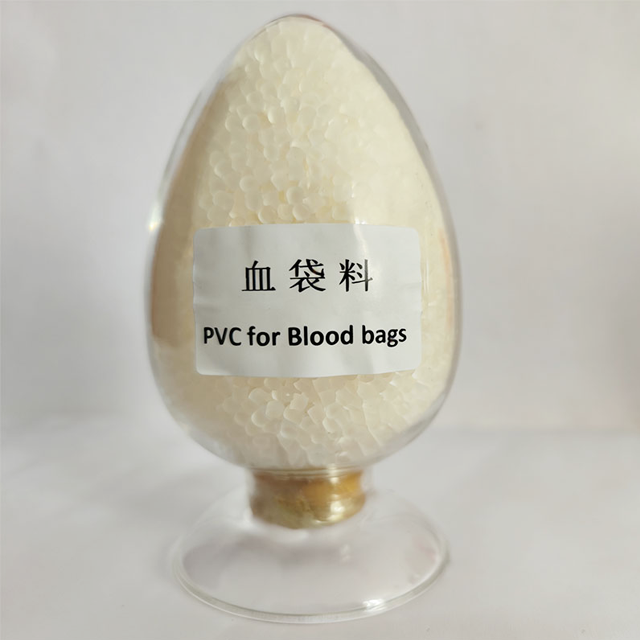
Because these containers serve as the primary interface between life-saving biological fluids and human tissue, their manufacturing is governed by an uncompromising matrix of international regulations. Regulatory bodies universally classify them as Class II or Class III medical devices. This classification demands extensive empirical validation before a product is ever approved for clinical deployment.
The central international framework governing this sector is ISO 3826, specifically dedicated to plastics collapsible containers for human blood and blood components. This multi-part standard dictates everything from the required wall thickness and seam strength to the precise chemical extraction methods used to test the plastic film. Concurrently, raw materials must satisfy strict pharmacopoeial monographs. In the United States, formulations undergo USP Class VI testing. This involves a series of in vivo biological reactivity assessments to confirm the absence of systemic or intracutaneous toxicity. Similarly, the European Pharmacopoeia enforces stringent limits on heavy metals, sulfated ash, and additive migration.
From a shop-floor engineering perspective, securing commercial distribution requires absolute material traceability. Whether pursuing FDA 510k clearance or EU MDR CE Marking, manufacturers must implement a robust Quality Management System. This guarantees unyielding lot-to-lot consistency from the raw resin reactor all the way to the finished hospital supply room.
In its pure, unformulated state, the base polymer is far too stiff for medical packaging. To transform this rigid resin into the soft, pliable film necessary for a collapsible system, manufacturers must compound the material with a plasticizer. These chemical additives wedge themselves between the long polymer chains. They increase free volume and allow the molecules to slide past one another, thereby imparting the necessary flexibility for fluid drainage.
For decades, Di-2-ethylhexyl phthalate, commonly known as DEHP, has reigned as the dominant softening agent. The continued reliance on this specific compound is rooted in a fascinating, scientifically documented phenomenon. As its molecules slowly leach from the plastic matrix into the stored fluid, they intercalate into the lipid bilayer of red blood cells. This unexpected interaction physically stabilizes the cell membrane. It dramatically reduces osmotic fragility and prevents the cells from breaking down. Thanks to this stabilizing effect, traditional formulations can preserve cell viability for up to 42 days, a metric absolutely vital for maintaining global blood bank inventories.
Despite this undeniable technical efficacy, the utilization of traditional phthalates has ignited intense debate within the toxicological community. Extensive research suggests that prolonged exposure may act as an endocrine disruptor. This raises significant physiological concerns for highly vulnerable patient demographics, such as neonates in intensive care or trauma victims requiring massive, rapid transfusions.
Driven by these health considerations and tightening legislative restrictions, the medical plastics industry is actively transitioning toward emerging non-phthalate alternatives. Compounds such as DINCH, TOTM, and citrates are undergoing rigorous evaluation. While these modern alternatives offer vastly improved safety profiles, chemical engineers face the ongoing hurdle of matching the exceptional 42-day cellular preservation historically achieved by legacy formulations.
The ultimate safety of a medical device is determined not just by its primary structural material, but by any secondary chemical substances that might escape from it. In the context of fluid storage, controlling chemical migration from the container into the biological fluid is a paramount, non-negotiable safety requirement.
In analytical chemistry and regulatory science, these migrating compounds are categorized into two distinct groups. First are extractables, which are chemical entities forced out of the polymer matrix under extreme, artificial laboratory conditions. Exposing the plastic to aggressive solvents at elevated temperatures establishes the absolute worst-case scenario of what the material could theoretically release. Leachables, conversely, are the specific compounds that actually migrate into the blood or plasma under normal, real-world storage conditions over the product intended shelf life.
To monitor these substances, manufacturers deploy advanced analytical instrumentation. Gas Chromatography-Mass Spectrometry is utilized for volatile organics, while High-Performance Liquid Chromatography handles non-volatile additives. Once every migrating chemical is identified and quantified, toxicologists conduct comprehensive risk assessments. Their goal is to guarantee that the concentration of any leachable substance remains significantly below established Tolerable Intake thresholds. When a hemorrhaging patient receives ten units of whole blood, they also absorb any chemical compounds suspended within it. Thus, minimizing this chemical transfer is vital for preserving patient health during critical interventions.
Before a needle ever pierces a donor vein, the collection container must be absolutely devoid of microbial life. Consequently, the formulated polymer must possess the resilience to survive harsh sterilization environments without suffering chemical degradation, toxic byproduct generation, or loss of physical integrity.
The most prevalent clearing method utilized globally is steam autoclaving. This brutal process exposes the empty, sealed containers to saturated steam at 121 degrees Celsius for up to 20 minutes. Because softening agents inherently lower the glass transition temperature of the plastic, the material becomes highly susceptible to thermal warping. This creates a problematic phenomenon known as blocking, where the inner walls of the heated bag fuse together. To combat this, manufacturing engineers often imprint the internal surface of the film with a microscopic embossed texture. This ensures the bag can be easily separated and filled after the heat cycle concludes.
Alternatively, some manufacturers employ Gamma irradiation or Ethylene Oxide gas. Gamma irradiation is highly effective at destroying microbial DNA, but it bombards the polymer with high-energy photons that can cause polymer chain scission. This radiation often induces a noticeable color shift, leaving the transparent plastic with a slight yellow tint. Preventing this requires the addition of specialized stabilizing antioxidants during the compounding phase. Regardless of the method chosen, the post-processing integrity of the material is strictly audited to prove the clearing process has not compromised clinical safety.
Beyond the complex chemistry of biocompatibility, the sheer physical toughness of the container is paramount. Throughout its lifecycle, the material is subjected to extreme mechanical and thermal stresses. Translating these abstract regulatory requirements into concrete engineering specifications is crucial for successful product development. When evaluating raw materials, engineers must look at specific, measurable parameters.
Technical Parameter |
Standard Requirement |
Engineering & Clinical Application |
|---|---|---|
Shore Hardness |
65A to 85A |
Ensures optimal flexibility for gravity drainage without causing attached tubing to kink or collapse during transfusion. |
Specific Gravity Density |
1.18 to 1.22 g/cm³ |
Maintains structural integrity and prevents film rupture during high-speed centrifugation processes. |
Light Transmittance |
Greater than 85% |
Allows medical staff to perform immediate visual inspections for hemolysis, clots, or lipidemia. |
Thermal Stability |
Withstands 121°C |
Prevents film blocking and material degradation during high-temperature steam autoclaving. |
Low-Temperature Impact |
Resists -80°C |
Ensures the plastic does not shatter when storing fresh frozen plasma or cryoprecipitate in deep freeze conditions. |
Centrifuge resistance is a daily operational necessity that pushes these parameters to their limits. During routine blood banking, technicians load filled containers into high-speed centrifuges. The immense gravitational forces applied to separate plasma from red cells demand flawlessly radio-frequency welded seams. The film must stretch slightly to accommodate the pressure without rupturing, preventing catastrophic equipment contamination and the loss of priceless biological resources.
For procurement teams and medical device manufacturers, sourcing the correct raw material is a high-stakes, bottom-line decision. The capabilities of the polymer supplier directly dictate regulatory approval timelines, manufacturing defect rates, and ultimate patient safety. A poor material choice leads to catastrophic extrusion failures and rejected batches.
First and foremost, procurement managers must demand materials produced strictly within certified cleanroom environments, typically ISO Class 7 or 8. Airborne particulates, dust, or microscopic biological contaminants introduced during the compounding extrusion phase will become permanently embedded in the film. This leads to immediate batch rejection during visual quality control inspections.
Equally critical is the demand for absolute material traceability and consistency. The medical device regulatory landscape operates on the rigid principle of change control. A supplier cannot subtly alter the formulation, switch the source of the base resin, or change additive vendors without forcing the manufacturer into a massive, costly re-validation process. Top-tier suppliers provide comprehensive Certificates of Analysis for every single batch, proving unyielding lot-to-lot consistency.
Finally, sophisticated suppliers distinguish themselves through custom formulation capabilities. Because different biological components demand vastly different storage environments, a one-size-fits-all resin is clinically inadequate. Industry-leading compounders offer tailored blends. They provide optimized, traditional formulations for long-term red cell storage, alongside highly permeable, alternative blends designed specifically for pediatric use or platelet preservation. Partnering with a supplier who deeply understands the clinical nuances of extrusion and transfusion medicine is the most effective strategy for ensuring a compliant end product.
The engineering behind medical grade PVC is a testament to the intersection of polymer science and life-saving healthcare. Far removed from standard commercial plastics, this highly regulated material requires precise, deliberate formulation to balance flexibility, chemical purity, and physical durability. From managing the complex behavior of softening agents to strictly limiting chemical extractables, every aspect of its design is geared toward protecting delicate biological fluids.
Ultimately, selecting and validating high-quality polymer compounds is not merely an exercise in checking regulatory boxes. It is a fundamental commitment to patient safety. Ensuring that these containers can withstand extreme thermal processing, high-speed centrifugation, and sub-zero storage without compromising the fluid within is what makes modern transfusion medicine possible.
As global health standards continue to evolve and tighten, manufacturers and procurement managers must proactively review their current material specifications. Consulting with specialized medical polymer compounders to upgrade formulations is the best way to safeguard your product pipeline. If you are looking to optimize your manufacturing process with fully compliant, high-performance polymer pellets, explore the tailored solutions available at KEGFZ to ensure your products meet the highest international standards.
Medical grade PVC is manufactured under highly controlled, ISO-certified cleanroom conditions to prevent any particulate or microbial contamination. It utilizes highly purified base resins and incorporates specific, biocompatible additives that meet stringent medical standards, such as USP Class VI and ISO 3826. In stark contrast, standard commercial plastics often contain toxic heavy metal stabilizers like lead and unregulated plasticizing agents, making them entirely unsafe for human contact or medical fluid storage.
Despite ongoing discussions regarding its chemical migration profile, this specific compound possesses a uniquely beneficial clinical advantage. As it leaches in microscopic amounts, it interacts with and stabilizes the lipid membrane of stored red blood cells. This physical stabilization significantly minimizes hemolysis, which is the premature breakdown of red cells, and extends the viable shelf life of the blood up to 42 days. For global blood banks managing critical inventories, this extended preservation window is absolutely essential.
Manufacturers employ highly advanced analytical chemistry techniques to detect and quantify migrating compounds. Methods such as Gas Chromatography-Mass Spectrometry and High-Performance Liquid Chromatography are industry standards. During these regulatory tests, the plastic material is exposed to various solvent simulators under accelerated, high-temperature conditions. This process forces potential chemical leachables out of the polymer matrix, allowing toxicologists to measure them and confirm they fall safely below established human safety thresholds.
Yes, it is specifically engineered at the molecular level to endure harsh clearing environments. Formulations designed for fluid containers can withstand steam autoclaving at temperatures typically around 121 degrees Celsius without melting or fusing together. Furthermore, they can be formulated with specific antioxidants to resist degradation, brittleness, or severe discoloration during Gamma irradiation or Ethylene Oxide gas exposure, ensuring the bag remains flexible and intact for clinical use.
While alternative polymer materials like polyolefins are utilized for certain niche applications, such as specialized platelet storage bags that require exceptionally high oxygen and carbon dioxide permeability, medical grade PVC remains the dominant material globally. It continues to offer the most reliable, empirically proven balance of manufacturing cost-effectiveness, optical transparency, physical flexibility, and ease of high-frequency seam welding. The current industry focus remains largely on optimizing existing formulations with safer additives rather than replacing the base polymer entirely.
The storage duration depends heavily on the specific polymer formulation and the biological component being stored. Whole blood and red blood cells stored in traditional, optimized PVC bags can be safely preserved for up to 42 days under refrigeration. Platelets, which require continuous gas exchange through the plastic walls, are typically stored for 5 to 7 days at room temperature. Fresh frozen plasma can be stored in specialized cold-resistant PVC bags for up to one year at -18 degrees Celsius or colder.
When stored correctly in their original, unopened packaging, medical grade PVC pellets typically have a shelf life of 12 to 24 months from the date of manufacture. To maintain optimal extrusion properties and prevent moisture absorption or additive migration, the pellets must be stored in a climate-controlled environment. Facilities should keep the raw material in a cool, dry place away from direct sunlight and extreme temperature fluctuations to ensure batch-to-batch consistency during the final manufacturing phase.


