

Views: 0 Author: Site Editor Publish Time: 2026-11-06 Origin: Site


Safety First: Transitioning to modern formulations eliminates the toxicological risks associated with traditional ortho-phthalates. This makes them essential for high-stakes medical, food, and beverage applications.
Reduced Leaching: Advanced chemical structures offer superior resistance to chemical extraction. This ensures absolute fluid purity and extends the operational lifespan of the tubing in demanding environments.
Uncompromised Performance: Modern alternatives maintain and frequently enhance the essential bendability and tactile feel required for high-performance fluid transfer and peristaltic pump operations.
Regulatory Compliance: Adopting updated materials ensures strict compliance with global regulatory frameworks, including EU REACH, RoHS, FDA CFR 21, and EPA guidelines.
Application-Specific Solutions: Identifying the correct alternative depends heavily on your specific industry requirements regarding temperature resistance, system pressure, and biocompatibility.
I have spent years routing fluid transfer lines through everything from clinical dialysis machines to heavy-duty industrial peristaltic pumps. For a long time, standard polyvinyl chloride tubing was our reliable workhorse. It quietly transferred life-saving saline in hospitals and craft beer in local breweries. However, the landscape of fluid dynamics is undergoing a massive shift. The urgent phase-out of traditional chemical additives is disrupting how we manufacture and specify this ubiquitous material.
To understand this material science revolution, we must look at the core components of polymer manufacturing. Raw polyvinyl chloride is inherently a rigid and brittle polymer. Its molecular structure consists of tightly packed chains with strong intermolecular forces. This makes the raw material perfect for rigid construction pipes but entirely unusable for dynamic fluid transfer applications that require bending around tight corners or routing through complex machinery.
To transform this stiff plastic into a versatile material, a specific Plasticizer must be introduced during the compounding process. At a molecular level, these compounds embed themselves between the rigid polymer chains. By doing so, they increase the free volume within the polymer matrix and lower the glass transition temperature. This physical separation allows the polymer chains to slide past one another when physical stress is applied. This mechanism directly controls the Flexibility of the final extruded tubing.
Historically, DEHP, known chemically as Di-2-ethylhexyl phthalate, served as the industry standard for decades. Manufacturers favored it because it offered exceptional processing efficiency, low production costs, and predictable fusion characteristics. It effectively imparted the exact mechanical properties required for everything from garden hoses to intravenous medical lines. Today, mounting health and environmental concerns have triggered strict global regulations. This forces a rapid transition to safer alternatives. Switching to a DEHP Free formulation fundamentally changes the safety profile, mechanical properties, and chemical stability of your fluid pathways.
The transition away from legacy chemicals is not driven by performance deficits. It is driven by mounting empirical evidence regarding human health and environmental safety. Toxicological research over the past two decades has classified DEHP as an endocrine-disrupting chemical. Peer-reviewed studies indicate that prolonged exposure to ortho-phthalates can interfere with the human hormonal system. This poses potential reproductive and developmental hazards, particularly in vulnerable populations such as neonates and pregnant women.
Consequently, this scientific consensus has triggered a robust regulatory response globally. The European Union REACH framework has placed DEHP on its list of Substances of Very High Concern, severely restricting its use. In the United States, California Proposition 65 lists DEHP as a known carcinogen, requiring strict warning labels. Furthermore, the FDA has issued updated guidance recommending the phase-out of DEHP in specific medical devices, while the EPA continues to monitor phthalate emissions in industrial runoff.
Looking at current industry trends, there is a massive spike in demand for non-phthalate materials. This surge is particularly driven by the biopharmaceutical sector and its heavy reliance on single-use technologies. As vaccine production and personalized medicine scale up globally, manufacturers absolutely cannot risk fluid contamination. Stricter environmental regulations mean that relying on legacy chemicals is a fast track to obsolescence. For procurement managers and original equipment manufacturers, continuing to source DEHP-laden tubing represents a significant business liability. Failing to adopt safer alternatives exposes brands to regulatory fines, product recalls, and restricted access to international markets.
When I inspect older peristaltic pump lines, I often see stiffening and discoloration. To evaluate the safety and longevity of any PVC tubing, engineers must analyze the phenomenon of chemical leaching. Unlike monomers that polymerize to form the backbone of a plastic, these chemical softeners are not covalently bound to the polymer matrix. Instead, they are held in place merely by physical entanglement and weak Van der Waals forces. Over time, or under specific environmental conditions, these molecules can detach from the matrix and leach out into the surrounding environment. This contaminates the ambient air in a cleanroom or the fluids passing through the tubing.
DEHP is particularly susceptible to extraction. Its molecular weight and structure make it highly mobile when exposed to non-polar solvents, lipids or fats, or elevated temperatures. In medical settings, when lipid-based nutritional fluids or blood products flow through legacy tubing, the lipids actively extract the DEHP from the tube walls. This delivers the chemical directly into the patient bloodstream. Similarly, in food processing, warm dairy products can trigger rapid leaching, compromising product purity.
Modern alternative additives solve this critical flaw through advanced molecular engineering. Non-phthalate alternatives are typically designed with higher molecular weights, bulkier molecular shapes known as steric hindrance, or different polarity profiles. These structural changes cause the molecules to lock more securely into the polymer matrix. As a result, the rate of Migration is drastically reduced. This holds true even when the tubing is subjected to aggressive lipid solutions, harsh cleaning chemicals, or high-temperature sterilization cycles. This ensures that the fluid remains uncontaminated and the tubing retains its mechanical integrity over a longer service life.
A primary concern among procurement professionals and frontline engineers is whether transitioning to safer materials will compromise mechanical performance. In fluid management, tubing must navigate tight routing spaces without kinking. It must also fit securely over barbed fittings without splitting.
Extensive material testing demonstrates that modern non-phthalate formulations can seamlessly match the mechanical profiles of traditional materials. Manufacturers achieve the required bendability by adjusting the parts-per-hundred-resin ratio of the alternative additive. Because some alternatives have a slightly different solvation efficiency than legacy options, compounders simply recalibrate the blend to achieve the exact same performance curve.
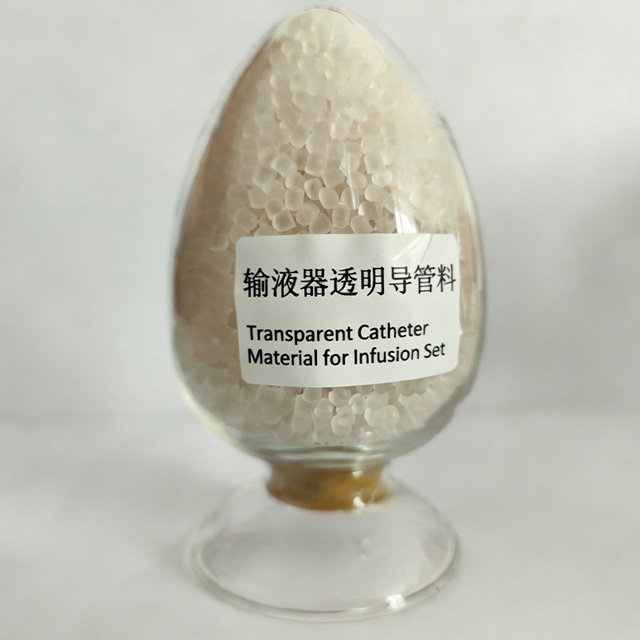
Regarding tactile feel and compressibility, Softness is empirically measured using the Shore A durometer scale. Advanced alternative formulations can accurately hit these exact target durometers. For instance, premium medical-grade transparent catheter materials engineered for transfusion equipment typically target a precise 65 to 85 Shore A hardness. This specific range ensures high transparency, excellent kink resistance, and identical behavior in peristaltic pumps where consistent compression and rebound are critical for accurate flow rates.
In some operational parameters, alternative formulations actually outperform legacy materials. Certain non-phthalate options exhibit superior low-temperature pliability and better dimensional stability during high-heat autoclave sterilization. This prevents the tubing from becoming brittle or degrading under thermal stress.
The chemical industry has rapidly developed sophisticated alternatives to replace traditional ortho-phthalates. These modern compounds replicate the mechanical benefits of legacy additives while eliminating the associated health and environmental hazards. Understanding their distinct chemical profiles is crucial for selecting the right material for your specific application.
Additive Type |
Migration Resistance |
Thermal Stability |
Primary Application Focus |
|---|---|---|---|
DOTP |
Moderate to High |
Standard |
General fluid transfer, cost-effective drop-in replacement. |
DINCH |
Very High |
Good |
Medical devices, blood bags, pediatric care, enteral feeding. |
TOTM |
Extreme |
Excellent (High Heat) |
Industrial harsh environments, continuous sterilization cycles. |
Bio-based (Citrates) |
Moderate |
Standard |
Eco-conscious manufacturing, secondary stabilizers. |
DOTP or Dioctyl Terephthalate has emerged as the most prominent direct drop-in replacement in manufacturing. From a chemical standpoint, it is a terephthalate. Its molecular structure prevents it from interacting with biological receptors, eliminating endocrine-disrupting properties. It offers an excellent balance of cost-effectiveness and performance.
DINCH was developed specifically for applications requiring the highest levels of human safety. It is a non-aromatic compound featuring a high molecular weight and unique ring structure. This severely restricts its ability to move through the polymer matrix. It is highly resistant to washout by aqueous solutions, blood, and lipid-heavy nutritional fluids.
When extreme durability and thermal stability are non-negotiable, TOTM or Trioctyl Trimellitate is the preferred choice. Its defining characteristic is ultra-low volatility and robust resistance to extraction under severe environmental stress. It is chosen for high-temperature applications where the tubing must endure continuous sterilization without becoming brittle.
The operational demands placed on fluid lines vary drastically across sectors. Selecting the appropriate formulation requires a deep understanding of industry-specific compliance standards and environmental stressors.
Medical Grade Tubing: In the healthcare sector, biocompatibility governs all material choices. Medical grade tubing is utilized in intravenous therapy, hemodialysis, cardiopulmonary bypass procedures, and respiratory care. Patients are highly vulnerable, making exposure to leaching chemicals a critical risk. Hospitals now strictly mandate non-phthalate tubing. You should specify materials that guarantee zero extractables and leachables. Look for formulations specifically designed for high transparency and a Shore A hardness of 65 to 85 to ensure kink-free operation in critical care equipment.
Food and Beverage Tubing: This industry requires tubing that transports consumable liquids without altering chemical composition or organoleptic properties like taste and odor. Transferring dairy products, alcoholic beverages, or purified drinking water often involves lipid-rich environments or acidic conditions that accelerate chemical leaching. Utilizing a high-quality non-phthalate formulation is mandatory to maintain compliance with FDA 21 CFR regulations and European Food Safety Authority guidelines.
Industrial and Laboratory Tubing: Industrial environments present different challenges. Tubing here is exposed to harsh chemicals, fluctuating temperatures, and continuous mechanical stress. Tubing used in peristaltic pumps must endure constant compression and expansion without cracking. In these scenarios, formulations utilizing TOTM or robust DOTP blends are required. These ensure the tubing remains flexible in cold environments and resists degradation when exposed to industrial solvents.
Navigating the procurement process requires diligence. The market contains varying grades of materials, and verifying the authenticity of a manufacturer is essential for robust risk management.
A rigorous review of the manufacturer Technical Data Sheet and Material Safety Data Sheet is the first step. Procurement teams must look beyond generic marketing claims. The documentation must explicitly state the exact chemical compound used, such as DOTP, DINCH, or TOTM, and provide the corresponding Chemical Abstracts Service registry numbers. This transparency confirms the use of recognized, safe alternatives.
Reputable suppliers readily provide documentation proving their materials have passed stringent third-party testing. Depending on your industry, request certifications such as ISO 10993 for biocompatibility, USP Class VI for strict pharmaceutical applications, and REACH or RoHS compliance to verify the total absence of restricted hazardous substances.
The final step is establishing a relationship with a manufacturer capable of custom engineering. Off-the-shelf tubing may not always suffice. A sophisticated supplier will work directly with your engineering team to dial in the exact Shore A durometer required for your equipment. Auditing their quality control processes and requesting batch-testing records ensures you receive a consistently safe product.
The transition to safer tubing formulations is no longer just a regulatory hurdle. It represents a significant performance and safety upgrade for modern manufacturing. By phasing out legacy ortho-phthalates, industries effectively stop toxic chemicals from leaching into critical fluid paths. More importantly, this transition does not require a compromise in mechanical performance. Advanced alternative formulations ensure you keep the exact bendability and tactile feel your specific application demands. Now is the time to proactively audit your current supply lines. If you are upgrading your fluid transfer systems, explore the high-performance transparent catheter materials and specialized formulations available at KEGFZ to ensure your equipment meets tomorrow's standards today.
Initially, the transition to specialized alternative additives like DINCH or TOTM may introduce a slight premium to raw material costs compared to legacy chemicals. However, evaluating the total cost of ownership reveals a different picture. As global manufacturing scales up production of these safer alternatives, prices have stabilized significantly. Utilizing compliant materials eliminates severe financial risks associated with regulatory fines, product recalls, and liability claims. In the long term, investing in compliant tubing is highly cost-effective.
No, the tactile feel and mechanical performance will not be compromised. Polymer engineers have spent years refining these alternative formulations specifically to match the performance profiles of traditional materials. Manufacturers precisely control the Shore A durometer to achieve the exact degree of pliability required. Whether you need highly pliable tubing for intricate medical devices or thicker, kink-resistant lines for industrial transfer, modern formulations deliver identical or superior physical handling characteristics.
The mechanism lies in advanced molecular engineering. Traditional additives were notorious for leaching because of their relatively low molecular weight and simple structure. This allowed them to slip out of the polymer chains easily. Modern alternatives are designed with significantly higher molecular weights and complex, bulky chemical structures. This creates steric hindrance, anchoring the molecules securely within the matrix. Consequently, they are far less likely to wash out when exposed to warm fluids, lipids, or aggressive solvents.
Absolutely. The pressure rating is dictated by the wall thickness, the specific resin blend, and whether the tubing incorporates internal reinforcement, rather than just the additive used. Safer tubing can be manufactured with polyester or nylon yarn braiding embedded within the walls to handle high-pressure environments. By selecting an appropriate heavy-duty formulation like TOTM, the tubing maintains its structural integrity and burst pressure rating under rigorous industrial conditions.
Visual inspection cannot determine the chemical composition of your fluid lines. To verify the presence or absence of specific additives, you must review the Technical Data Sheet and Material Safety Data Sheet. Look for explicit declarations. If the documentation is vague or unavailable, send a sample to an independent, accredited testing laboratory. Laboratories utilize techniques like Gas Chromatography-Mass Spectrometry or FTIR spectroscopy to accurately identify the exact chemical compounds present in the polymer matrix.
When stored correctly in a cool, dry environment away from direct ultraviolet light and extreme temperature fluctuations, high-quality non-phthalate tubing generally offers a shelf life of three to five years. Advanced formulations, particularly those utilizing TOTM or DINCH, exhibit excellent long-term stability. They resist the gradual stiffening and surface exudation that often plagued older legacy materials during prolonged storage.
Yes, modern non-phthalate formulations are highly compatible with gamma radiation sterilization, which is a standard requirement for single-use medical and biopharmaceutical assemblies. Engineers specifically compound these materials with specialized stabilizers that prevent the polymer chains from degrading or severely discoloring when exposed to standard gamma irradiation doses. Always consult the manufacturer technical specifications to confirm the maximum allowable radiation dosage for your specific tubing grade.


