

Views: 0 Author: Site Editor Publish Time: 2026-11-23 Origin: Site


Does patient safety rely on clear medical plastics? Absolutely. Poor transparency in medical tubing easily hides deadly air bubbles. Cloudiness might mask dangerous drug crystals forming during intravenous treatment. If a nurse cannot see through the drip chamber, the entire fluid delivery system becomes a clinical hazard.
Achieving the perfect optical properties for medical-grade polyvinyl chloride is a complex engineering challenge. As manufacturing standards tighten, relying on the naked eye is no longer enough. This guide breaks down the essential scientific tests required to guarantee the safety and efficacy of medical tubing. We will dive into the shop-floor realities of measuring light scattering, transmittance, and the exact metrics that keep production lines compliant.
Patient Safety is the Baseline: Optimal transparency remains a strict, non-negotiable requirement. It empowers healthcare professionals to identify air bubbles, monitor fluid levels, and spot particulate matter long before it reaches the bloodstream.
Quantifiable Core Metrics: The two most vital scientific measurements are light transmittance—the total light passing through the material—and light scattering, which causes that dreaded milky appearance.
Defect Troubleshooting: Implementing robust testing procedures helps plant managers identify upstream extrusion flaws, plasticizer incompatibility, and adverse sterilization reactions early in the run.
Upgraded Compliance: Medical devices must pass rigorous optical protocols to meet global frameworks, specifically the ISO 8536-4 standard for gravity-feed infusion equipment.
The physical properties of medical-grade plastics directly dictate clinical outcomes. Polyvinyl chloride remains the industry standard for tubing and drip chambers due to its inherent flexibility, physical durability, and cost-effectiveness. However, the functional success of these devices relies entirely on their optical purity. You simply cannot manage what you cannot see.
Imagine a high-stakes environment like a busy Intensive Care Unit. Nurses and physicians rely heavily on quick visual checks to monitor intravenous drips amidst chaotic alarms and tight schedules. If an infusion set lacks absolute transparency, clinicians cannot effectively gauge the flow rate within the drip chamber. Obscured visibility leads to undetected blockages. This directly results in incorrect dosing or interrupted life-saving therapy.
Beyond flow monitoring, absolute transparency acts as the primary barrier against injecting hazardous contaminants into a patient. Certain intravenous drugs interact negatively when mixed. This causes unexpected crystallization or precipitation within the tubing. A highly transparent fluid path allows medical staff to immediately detect these drug incompatibilities or any foreign particulate matter.
Equally critical is the identification of air embolisms. Clear tubing provides the only reliable way to spot and remove microscopic air bubbles before they travel through the line. Any opacity in the plastic compromises this visual safety check, drastically elevating the risk of fatal clinical errors. Maintaining pristine optical properties is never merely an aesthetic preference. It is a fundamental life-saving mechanism.
In the context of medical device manufacturing, systematic visual inspection acts as the ultimate gatekeeper. It ensures that no cloudy, discolored, or structurally defective products ever reach hospital supply rooms. Quality control workflows typically employ a combination of manual and automated examination techniques to catch flaws across high-volume production lines.
Human inspectors examine components under highly controlled lighting conditions against specific contrasting backgrounds. This manual approach proves excellent for detecting gross defects, severe discoloration, and complex anomalies that machines might misinterpret. In contrast, it remains subject to human fatigue and subjective judgment during long shifts.
To counter human error, modern facilities integrate high-resolution cameras and optical sensors that scan tubing on the production line in real-time. Machine vision provides objective, highly consistent data. It catches microscopic transparency flaws at extrusion speeds that the human eye simply cannot track.
To ensure reliable results across the board, manufacturers must meticulously standardize their inspection environments. Establishing specific illumination levels and utilizing high-contrast backgrounds—often alternating black and white grids—is mandatory. Standardized environments eliminate external lighting variables. This guarantees that results remain objective, repeatable, and aligned with global safety standards.
Moving beyond subjective evaluations requires standardizing how transparency is measured. To ensure an objective assessment of medical tubing, quality assurance teams rely on specific scientific tests to quantify optical properties down to the decimal point.
Think of this metric as the exact percentage of incident light that successfully passes through a transparent material without being absorbed or reflected. In intravenous therapy, a high baseline of light transmission is mandatory. Both the drip chamber and the IV tubing need maximum transmittance so the fluid interface remains distinctly visible.
Advanced spectrophotometers and specialized photometers measure this accurately. The equipment directs a standardized light beam through the sample, while a sensor on the opposite side calculates the penetrating light. Without adequate transmittance, the ambient light in a typical hospital ward will not sufficiently illuminate the fluid inside the tubing. This drastically reduces the clinician's monitoring capabilities.
While transmission measures how much light gets through, haze measures how that light behaves as it exits the material. It is scientifically defined as the scattering of light at an angle greater than 2.5 degrees from the incident beam. This scattering effect creates a cloudy, milky, or frosted appearance that severely reduces visibility.
Hazemeters are standard laboratory instruments used to test samples according to protocols like ASTM D1003. When analyzing medical plastics, QA engineers must differentiate between two distinct types of scattering. Surface haze is typically caused by external mechanical factors such as mold roughness, extrusion die scoring, or microscopic abrasions during the cooling phase. Internal haze originates from within the polymer matrix itself. This often points to incompatible resin blends, improper plasticizer dispersion, or moisture trapped during compounding.
Standard clarity tests are frequently complemented by colorimetry, specifically the Yellowness Index. Medical polymers are highly susceptible to thermal and radiation degradation. During gamma sterilization or prolonged shelf aging, polymer chains break down. They form conjugated double bonds that absorb blue light and reflect yellow light. Yellowness Index testing quantifies this color shift. It ensures the material remains visually neutral so clinicians do not misinterpret a yellow-tinted tube as a discolored medication.
Optical Metric | Target Value | Engineering Impact & Troubleshooting |
|---|---|---|
Light Transmittance | > 90% | Ensures fluid visibility under low ward lighting. Drops indicate poor resin melting or severe additive blooming. |
Haze | < 3% to 5% | Prevents milky appearance. High internal haze requires adjusting plasticizer solubility; high surface haze requires polishing extrusion dies. |
Yellowness Index | As close to 0 as possible | Prevents misdiagnosis of fluid color. Spikes usually point to thermal degradation in the barrel or aggressive Gamma/E-beam sterilization damage. |
Manufacturers cannot rely on internal benchmarks alone. They must adhere to strict international regulations that dictate the required optical properties for medical devices. Failing to meet these standards carries severe consequences. You face immediate product recalls, failed regulatory audits, and the potential suspension of manufacturing licenses.
The International Organization for Standardization provides specific mandates for gravity-feed infusion equipment under ISO 8536-4. A primary requirement within this standard is that the transparency of the tubing and drip chamber must allow for the clear visual detection of the fluid interface and any entrained air bubbles. The material must be sufficiently transparent when tested under normal clinical lighting conditions.
Furthermore, we are witnessing a massive shift in industry trends driven by tighter European Medical Device Regulations and FDA guidelines. Regulators are moving away from accepting basic pass/fail visual checks. They now demand continuous, quantifiable optical data. This regulatory pressure is forcing extrusion plants to adopt real-time inline optical monitoring, catching deviations long before they result in costly batch rejections.
Achieving consistent transparency in a laboratory is one thing. Maintaining it during mass production is an entirely different beast. Several variables introduce opacity or reduce light transmittance during the high-speed manufacturing process.
A major hurdle today is the aggressive, industry-wide pivot away from traditional plasticizers due to tightening global health regulations. Manufacturers are transitioning to alternative plasticizers like TOTM, DINCH, or DOTP. This trend introduces significant compounding challenges. The refractive index and solubility parameters of these newer alternatives differ fundamentally from legacy chemicals. If the compounding process is not perfectly optimized, microscopic phase separation occurs within the polymer matrix. This phenomenon significantly increases the baseline opacity, making rigorous PVC clarity testing more critical now than ever before.
Specifically, the extrusion process is notoriously sensitive to thermal fluctuations. If the melt temperature drops even slightly below the optimal threshold, the resin fails to fully plasticize. This leaves behind un-melted microscopic particles that scatter light violently. Conversely, excessive heat initiates thermal degradation, leading to immediate yellowing. The rate at which the extruded tubing is cooled in the water bath also affects the final product. Uneven or rapid cooling induces surface roughness and internal stress, both of which degrade optical performance.
When sourcing medical-grade compounds, you need hard numbers that translate to reliable shop-floor performance. Vague promises of "high clarity" do not pass regulatory audits. You need specific material parameters engineered for the exact medical application.
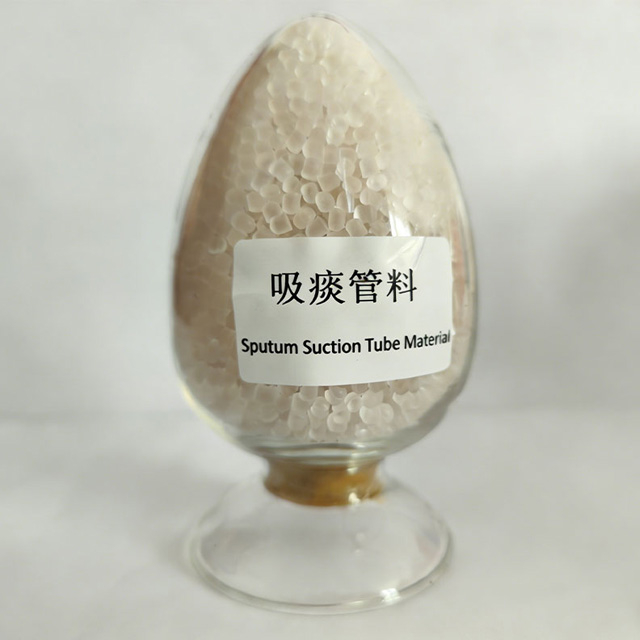
For instance, when evaluating PVC Plastic Suction Catheter Material for Transfusion Infusion Equipment, the base compound must guarantee a Shore Hardness tailored to clinical flexibility, typically ranging from 65A to 85A. More importantly, top-tier compounds must maintain a light transmittance exceeding 90 percent and a baseline haze below 3 percent. These optical properties cannot just exist in raw form; they must survive post-processing. The material must resist yellowing and retain its clarity even after rigorous Ethylene Oxide or Gamma sterilization cycles. Selecting a pre-optimized, high-purity compound eliminates half of your extrusion troubleshooting before the machine even turns on.
A robust quality assurance system does not test for transparency only at the end of the production line. It weaves optical checks throughout the entire manufacturing lifecycle.
Quality control begins long before the extruder heats up. Manufacturers must test incoming batches of raw resin and liquid plasticizers for their optical potential. By compounding small test plaques from raw material batches and measuring their baseline opacity, QA teams confidently reject substandard materials before they contaminate the main production line.
Continuous monitoring is required during active production. Quality protocols should establish strict intervals for technicians to physically pull tubing samples directly from the cooling bath. These samples undergo immediate benchtop spectrophotometer testing. Comparing these manual readings against automated inline sensor data ensures the manufacturing process remains tightly controlled.
The final stage involves a comprehensive review of all optical data collected during production. Samples from the finished batch must pass all ISO 8536-4 visual requirements. Post-sterilization samples must also be tested to confirm that the sterilization process did not push the yellowness index or cloudiness beyond acceptable regulatory limits.
The transparency of medical tubing is a strict functional necessity that extends far beyond basic aesthetic appeal. Crystal-clear tubing ensures ultimate patient safety by allowing clinicians to accurately deliver medications and instantly spot life-threatening hazards like air embolisms.
By combining rigorous scientific testing with strict visual examination protocols, manufacturers guarantee regulatory compliance and protect patient lives. If your current extrusion line struggles with haze, phase separation, or yellowing after sterilization, it is time to upgrade your raw materials. Explore our specialized, high-clarity medical-grade compounds—including premium PVC materials for transfusion and infusion equipment—at KEGFZ. We engineer solutions that pass strict ISO standards the first time, every time.
Light scattering levels must generally be kept exceptionally low. For high-clarity medical components, this is typically maintained well under 3 to 5 percent. This strict threshold ensures unrestricted visual monitoring of the fluid path, allowing clinicians to immediately identify hazardous air bubbles or particulate matter.
Human visual inspection is inherently subjective, inconsistent, and highly prone to operator fatigue. Measuring light transmittance with calibrated spectrophotometers provides objective, quantifiable data. This scientific approach removes human error and generates the precise documentation required to prove compliance with strict ISO and USP regulatory standards during audits.
Yes, the sterilization method significantly impacts optical properties. Gamma irradiation and E-beam processing expose the polymer to high energy. This causes chain scission, resulting in slight yellowing or increased cloudiness. Because of these chemical alterations, conducting precise optical testing both before and after the sterilization process is a vital component of quality assurance.
Yes, the industry has successfully shifted away from traditional plasticizers without sacrificing safety or transparency. Modern alternative plasticizers can achieve excellent transparency, high light transmittance, and low opacity. Achieving this requires manufacturers to properly optimize their extrusion temperatures, cooling rates, and compounding processes to match the specific chemical behaviors of these alternatives.
Transparency is tested using specialized laboratory equipment like hazemeters and spectrophotometers. These devices pass a standardized beam of light through the tubing sample. They measure the exact percentage of light that transmits through the material and calculate how much light scatters off-axis, providing precise numerical values for transmittance and haze according to ASTM D1003 standards.
ISO 8536-4 strictly mandates that the drip chamber and attached tubing must be transparent enough to allow clinicians to clearly observe the fluid interface. Under normal clinical lighting, medical staff must be able to visually detect any entrained air bubbles or fluid blockages without obstruction. Manufacturers must provide documented optical test data proving the material meets this visibility threshold.


